
Start Fairfax City Property Records
An address points you straight to the Fairfax City Real Estate Assessment Database. That entry ties the parcel to the city roll and offers a path to the mapped lot. An owner name works too. It can surface parcels held by a person, trust, estate, or company. Similar names still cause mix-ups. Sort them out with a parcel ID or a legal description. Ownership questions need a different custodian. Move from the roll to the Circuit Court Clerk's recorded land index to see who took title. For a tax balance, use the Treasurer's account lookup instead.
Each office records a different event. The assessment roll is a yearly tax record. The deed is a filed legal instrument. GIS is just a map layer. No single screen can prove that a later deed, lien, easement, or court order does not exist. Treat a Fairfax City property records search as a trail: identify the parcel, pick the right custodian, then compare names, dates, and legal descriptions before you conclude anything.
- Enter the situs address in the Fairfax City assessment database and save the property ID and legal description shown.
- Use the grantee on the newest conveyance to confirm the owner in Virginia Land Records Secure Remote Access, then look for later filings under that party as grantor.
- Check the City Treasurer's tax lookup for the bill, payment record, or balance; an assessed value is not a payment receipt.
- Open the city GIS map to compare the parcel's location with roads, zoning, floodplain, and recorded plat information.
- For an image or older record that is not online, ask the City Circuit Court Clerk or the relevant department about counter access, written requests, and copy options.
Offices Behind Fairfax City Property Records
Fairfax City handles its own assessment and tax work as an independent city, but recorded land instruments answer to the Clerk of the Circuit Court for the City of Fairfax. For transfer research, the assessor points people to land records at the Fairfax County Judicial Center. That regional arrangement can surprise anyone who assumes every city office sits at City Hall. Before visiting in person, confirm the Clerk's current counter location and hours, since those details are not published here.
The four systems below divide the work. A record request should name the custodian and the record type, not just say "property file." City Hall is at 10455 Armstrong Street, Fairfax, VA 22030, but that address is not a substitute for confirming where the Clerk's land-record counter is served.
City Circuit Court Clerk
Recorded deeds, deeds of trust, releases, plats, liens, judgments, and other land instruments.
Real Estate Assessments
Annual value, parcel, situs, owner-of-record, and assessment appeal information for city property.
City Treasurer
Real-estate tax bills, balances, payment history, and receipts. This is not the land-record index.
Fairfax City and County Records Split
The city and Fairfax County share a name and a region. They are still separate governments. Fairfax City is an independent city. Local property records follow the parcel's jurisdiction rather than a mailing label. The city assessment office keeps the city roll. Fairfax County keeps its own, different roll. The City of Fairfax also serves as the county seat. That relationship merges nothing, least of all the property databases.
ZIP 22030 is the main city ZIP on official pages. Postal geography can still cross a municipal boundary. For a property near the edge, search the city parcel map or assessment database. Write to any custodian only after that check. Even the Fairfax City Police neighborhood page sends residents to the real-estate map for this same jurisdiction check. Save the parcel ID after any match.
Fairfax City Assessment Timing
Fairfax City assessments happen every year. They take effect on January 1. That means 100 percent of fair-market value. The assessor picks a method by property type, drawing on comparable sales, income, or cost. The office covers about 9,700 parcels. A parcel record is a municipal tax entry, not a private appraisal report.
Timing creates one trap: a transaction recorded after the January 1 valuation date can appear in the deed index before the new deed name reaches the roll. The city publishes no fixed update lag. When a closing date matters, check the effective tax year on the assessment against the latest recorded deed. Council sets the tax rate; the assessor never sets the amount due.
The assessment office page links to the city database.
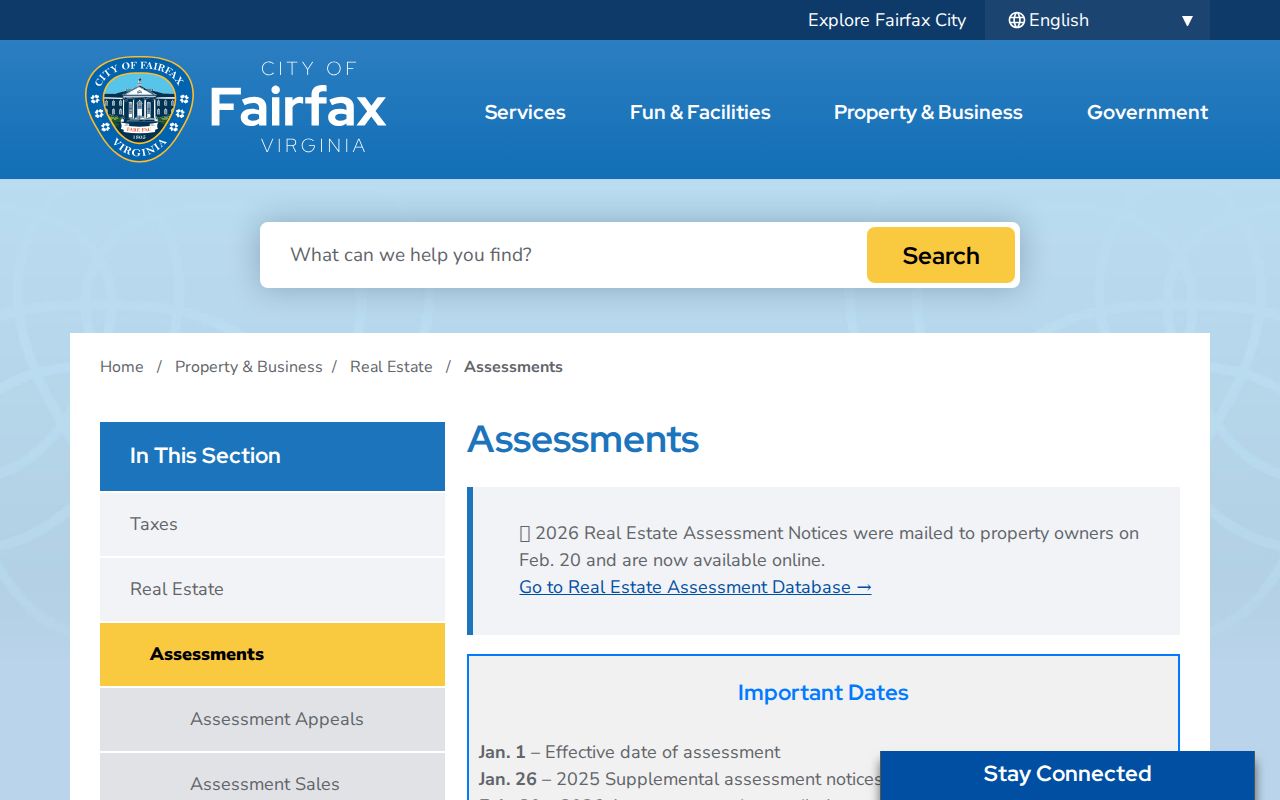
Line up the deed date and the assessment year before trusting any single record of a recent transfer.
Fairfax City SRA Index and Images
Recorded land instruments stay with the City Circuit Court Clerk. Electronic index access runs through Virginia's SRA/COVERS service when the local court enables it. Index searching can be free. Images are another matter. Clerk-authorized subscribers sign an agreement and pay applicable charges for document images. Fairfax City posts no stated start year or image fee, so an empty result never proves an older conveyance failed to exist.
Search both parties on a deed. The grantee receives an interest; the grantor transfers it. Related filings can include deeds of trust, assignments, releases, easements, covenants, plats, mechanic's liens, tax liens, judgments, and corrective instruments. Note each document type and instrument reference. Then capture record date, parties, and legal description. Virginia's land-record access page explains the difference between the free index and subscriber image access.
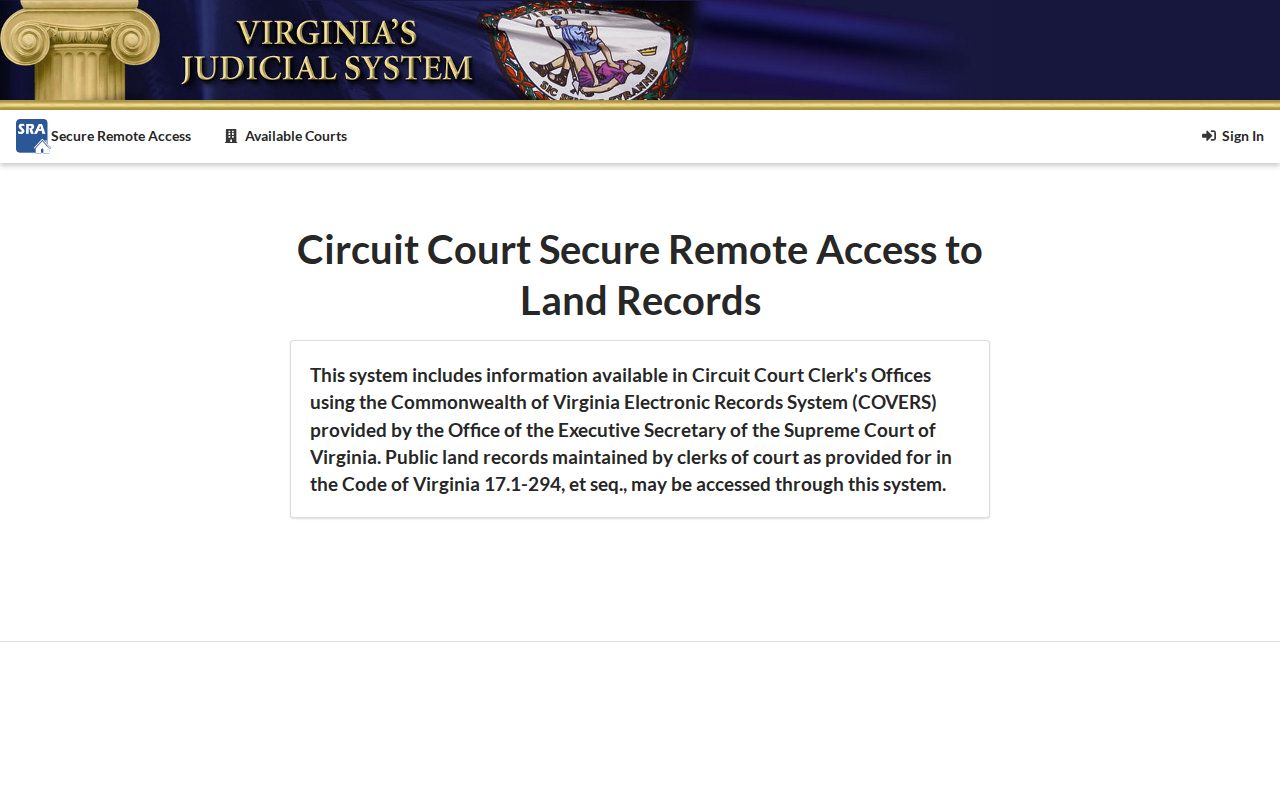
The web index has its limits. Ask the Clerk about a public terminal, counter help, written copy requests, and older deed books or microfilm if the online index stops short of what you need.
Fairfax City Treasurer and Tax Bills
Three offices divide the tax work. The assessor sets taxable value. City Council sets the rate. The Treasurer bills and collects. A tax account shows the balance, payments, and receipts. The assessment record explains the parcel and value behind that bill. Fairfax City's Treasurer search accepts an owner name, property ID, or address.
The city assessment page cites an example rate of $1.0725 per $100. Rates change, so check the live bill. The tax calendar sets June 21 for the first half. December 5 is the due date for the second half. Unpaid balances draw a 10 percent late fee. Monthly interest is applied on the 15th, per the Treasurer. Verify the current charge through the live account rather than an old bill.
Use the Treasurer's official services page for account lookup and payment information.
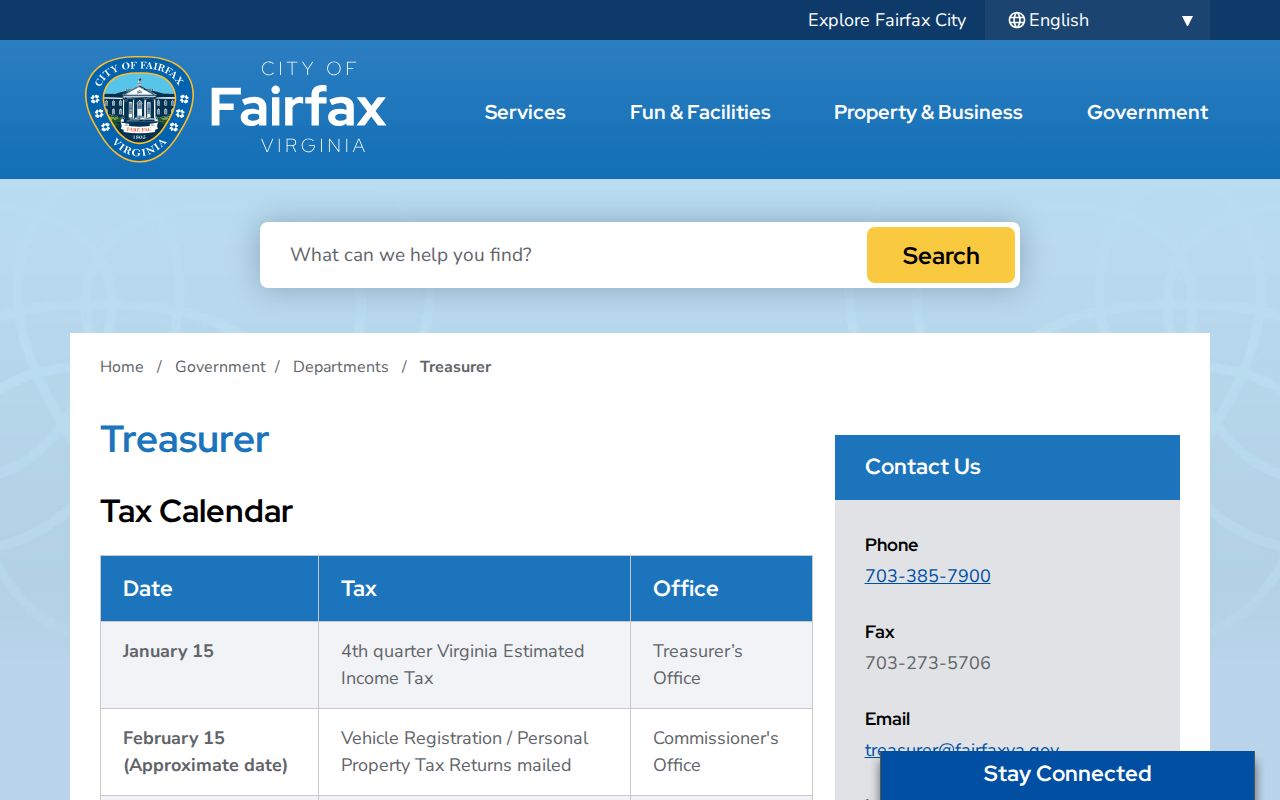
A payment receipt is stronger evidence of payment than an old assessment printout.
Record Types in Fairfax City Property Records
Match the record to the question. The land index shows filed instruments. The assessment database holds the tax roll. The Treasurer shows a bill and payment history, the map adds spatial context, and the permit portal tracks applications and inspections. A court docket can explain a dispute behind a land filing, though the docket and the recorded instrument stay separate Fairfax City property records.
| Record Type | What It Documents | Kept By | Access |
|---|---|---|---|
| Deeds and plats | Transfers, legal descriptions, lot and block references | City Circuit Court Clerk | SRA index; images by authorized subscriber or Clerk |
| Deeds of trust and liens | Security interests, releases, judgments, and encumbrances | City Circuit Court Clerk | SRA index and Clerk copy channels |
| Assessment | Owner of record, parcel, annual value, and tax relief record | Real Estate Assessments | City database and notice process |
| Tax account | Bill, balance, payment history, and receipt | City Treasurer | Online lookup and payment services |
| GIS and permits | Mapped layers, development context, applications, and inspections | City GIS and Code Administration | GeoHub and Accela Permit Portal |
For a copy of a conveyance, take the Fairfax City deed-record route. For an assessment notice or balance, compare the city's property tax records against the correct tax year. For maps, start with Fairfax City parcel maps, then pull the plat when a line carries legal weight.
Fairfax City GeoHub Parcel Context
Fairfax City GIS blends city-created layers, private-contractor data, and Fairfax County Government sources. Published layers cover parcels, roads, buildings, utilities, voting precincts, zoning, floodplains, parks, trails, environmental features, and development projects from 2012 to the present. The GeoHub offers more than 20 free datasets plus interactive planning maps, including development-status material.
A parcel shape helps locate land and compare nearby features. It is not a survey. It cannot replace a recorded plat, metes-and-bounds description, easement, or boundary monument. The official Fairfax City maps and GIS page leads to the GeoHub downloads.
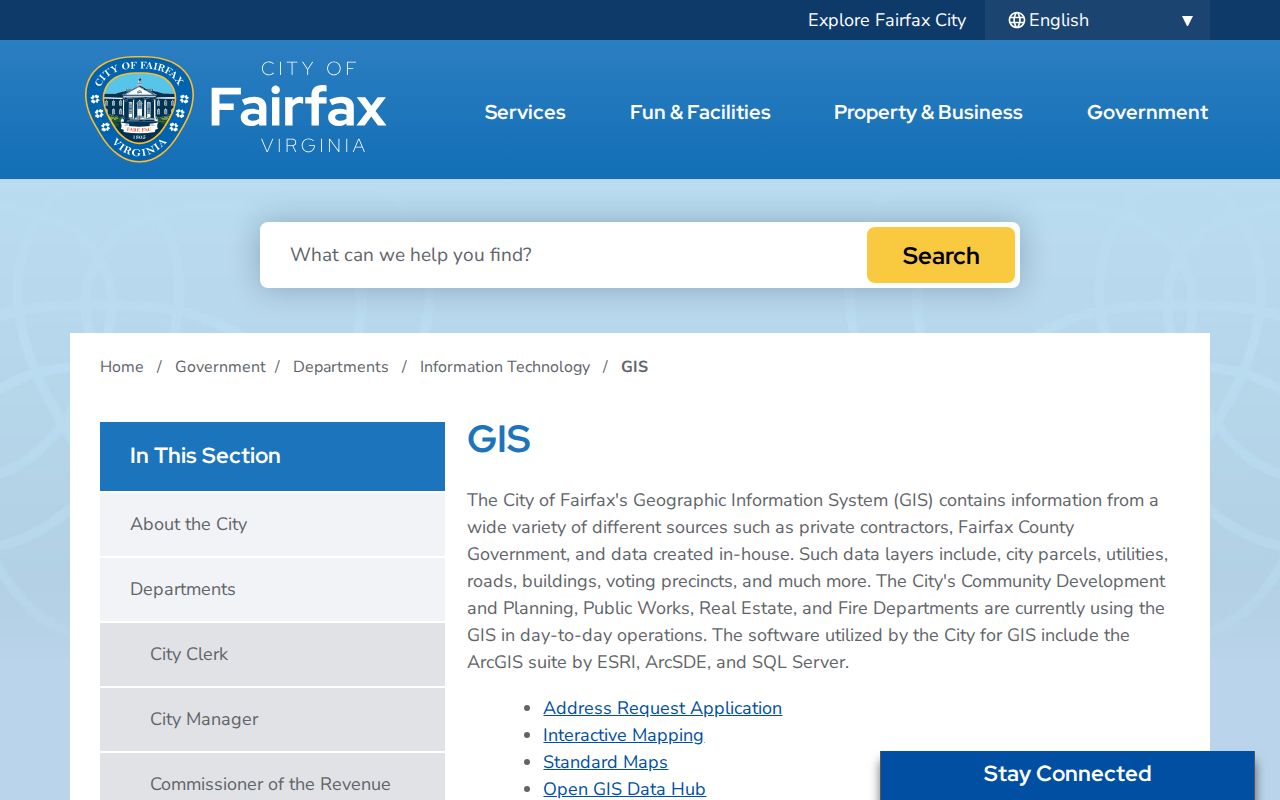
Use the property ID shown in the assessment system rather than guessing a parcel prefix. The city publishes no confirmed parcel-number format or map buffer tool.
Fairfax City Permits and Inspections
Permit files add a work history no deed contains. The City Permit Portal runs on Accela and supports applications, secure payments, document uploads, status tracking, research, and permit printing. An account is needed to schedule inspections, but the requester need not be the applicant or record holder. Searches start with an address or a record number such as BLD, PLB, or MEC.
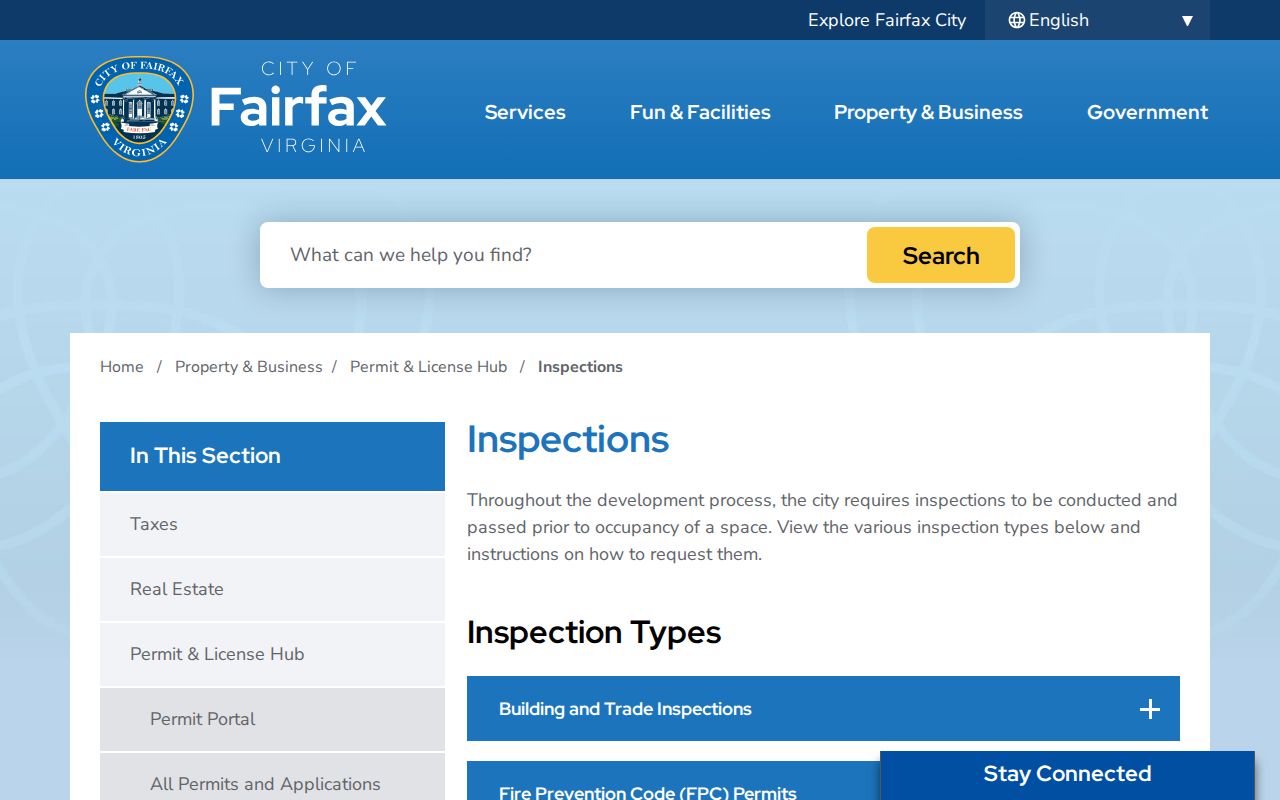
Fairfax City inspection types span building and trade, right-of-way, utility coordination, bonding, stormwater, fire prevention, residential use, backflow, elevators, pools, and rental units. Code Administration lists 703-385-7830; Community Development and Planning lists 703-385-7820; Public Works inspections use 703-385-7810 or PW-Inspectors@fairfaxva.gov. Each department handles different work, so contact the one named on the permit. An incomplete inspection can trigger a reinspection fee.
The city inspection page sets out inspection categories and contact routes.
The city does not publish portal coverage start dates or a complete fee table.
Fairfax City Old Town Record History
The city began as Providence in 1805. It grew around a courthouse finished in 1800. The town took the Fairfax name in 1874. Fairfax became an independent city in 1961. Its Fairfax City property records therefore cross town-era wording, county-era references, and current city systems. Trust the date and legal description on the instrument. An old "Fairfax" label may not match the jurisdiction behind a modern postal address.
Old Town's long narrow lots and courthouse-centered streets help a chain researcher. They matter when a chain shifts from metes and bounds to a later subdivision plat. Contributing buildings date from 1800 through the 1930s. The local Old Town overlay and the National Register boundary differ slightly. Board of Architectural Review review can generate planning records outside the deed index. The Fairfax City history source covers Providence, the courthouse, and the name changes.

Historic plats, maps, newspapers, city directories, and archive catalogs can bridge a changed street or lot description in Fairfax City research.
Fairfax City Population and Housing Figures
Population shifts help explain why Fairfax City parcel activity changes over time. Every figure needs its year kept. Census QuickFacts puts the city at 26,772 residents in a July 1, 2025 estimate. The 2020 Census counted 24,146. The 2010 count came in at 22,565. For 2020 through 2024, QuickFacts also reports 69.9 percent owner-occupied housing and a median owner-occupied home value of $722,600.
The city's 2026 Fact Book gives a different picture. It lists 26,340 people, drawn from a 2024 source, along with 10,467 housing units and 16,000 registered voters. Those numbers do not share a source year. Blending them into one trend line would mislead. Treat the demographics as backdrop, since an assessment, a sale, and a tax bill always stay parcel-specific.
The city updates the Fact Book each year and prints the source beside every figure. Preserve that year and source whenever a number is cited in property research.
Fairfax City Appeals and Notice Dates
Fairfax City assessment appeals follow an annual schedule. In 2026, assessment notices were mailed February 20. Administrative review requests were due April 3, and the Board of Equalization deadline fell on June 30. A separate general notification page still lists July 1 for the Board. When dates conflict, follow the date-specific current appeal instructions and the notice mailed for your parcel.
The Board can affirm, reduce, or raise an assessment. A further appeal goes to Circuit Court. Strong evidence includes nearby comparable sales, property characteristics, building condition, and a clear account of any factual error. The city weighs comparable-sales, income, and cost approaches as each property type requires. The right method depends on the disputed assessment.
Government land is constitutionally exempt from taxation. Religious, charitable, cultural, or historical-use properties may also qualify. The city mentions tax relief for elderly and handicapped owners but publishes no current age, income, application, or filing thresholds on those pages.
Limits of Fairfax City Property Records
Recorded ownership and assessment data are public. Fairfax City can still withhold or redact certain fields. Virginia offers eligible participants a substitute address through its Address Confidentiality Program. A public mailing address is not an invitation to pursue a person at home, and an assessment name does not reveal who occupies a building. Keep the purpose lawful and property-based. A transaction, boundary question, or estate fits. So do civic review and history projects.
For title questions, trace the latest deed and its related instruments instead of trusting a parcel card. For boundaries, compare the recorded plat and legal description, and hire a licensed surveyor when a line is disputed. A GIS map is not a survey. A tax assessment is not a sale appraisal, and a suspicious notice deserves a call through an official city channel before any money or personal details change hands.
Lawful use. Fairfax City property records support due diligence, ownership research, and civic work. Do not use an owner's information to stalk, harass, threaten, or harm anyone.
Virginia FOIA requests go to one place. They belong with the department that holds the existing record. Describe the address, parcel ID, owner, record type, and date span. Include the format and any fee limit. The custodian may redact material, cite an exemption, or send a cost estimate, and FOIA never requires staff to create a fresh analysis from separate records.
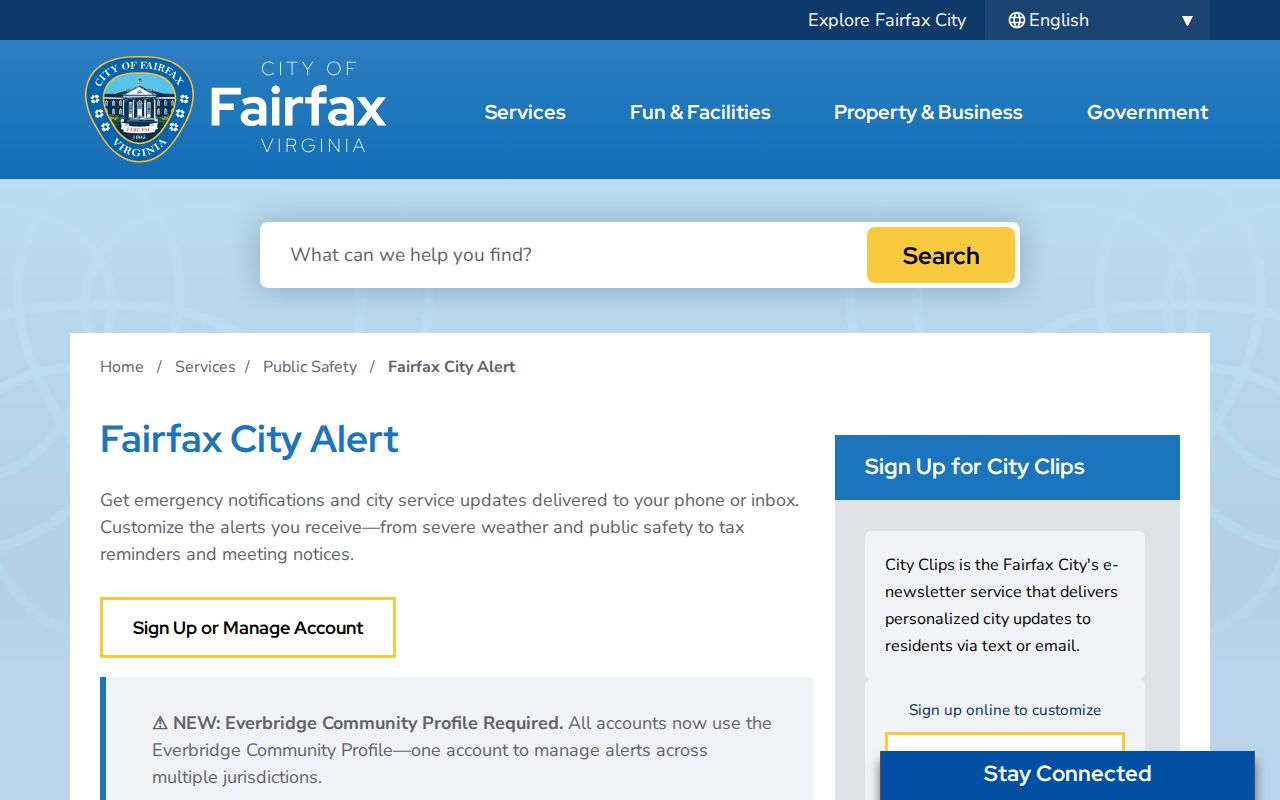
The city posts fraud and public-safety notices through Fairfax City Alert. Those alerts can flag misleading mailers or payment calls.
Scammers sometimes pose as deed-copy services or tax collectors. Keep the instrument numbers, envelopes, caller details, and payment directions handy so any suspected deed-copy or tax scam can be reported.