
Steps in a Fairfax City Property Search
Start with the city assessment database for an address-to-parcel match. Fairfax City describes it as a property-information search for any city address. The city police neighborhood page points residents to its map. They can confirm whether a Fairfax address sits inside city limits. Save the exact result key before moving on. The assessment portal shows its own search options, so use only the fields visible there.
A solid Fairfax City property search treats one property record as the anchor. Every other site serves as a cross-check. Owner names vary with punctuation or an entity suffix. Street addresses carry directional prefixes or older names. The legal description and parcel ID are steadier than either spelling, though the city publishes no parcel-number prefix to guess from.
- Search the complete address in the Fairfax City Real Estate Assessment Database.
- Write down the owner-of-record name, property ID, situs, mailing address, and legal description shown in the result.
- Use the address or ID in city GIS, and compare the mapped parcel with the legal description or recorded plat.
- Search the latest conveyance in Virginia SRA, then look for the same party in the Treasurer's tax lookup.
- Ask the custodian about a counter terminal, written request, or official copy if an online image or older record is unavailable.
The city assessment entry page is the live starting point for this address search.
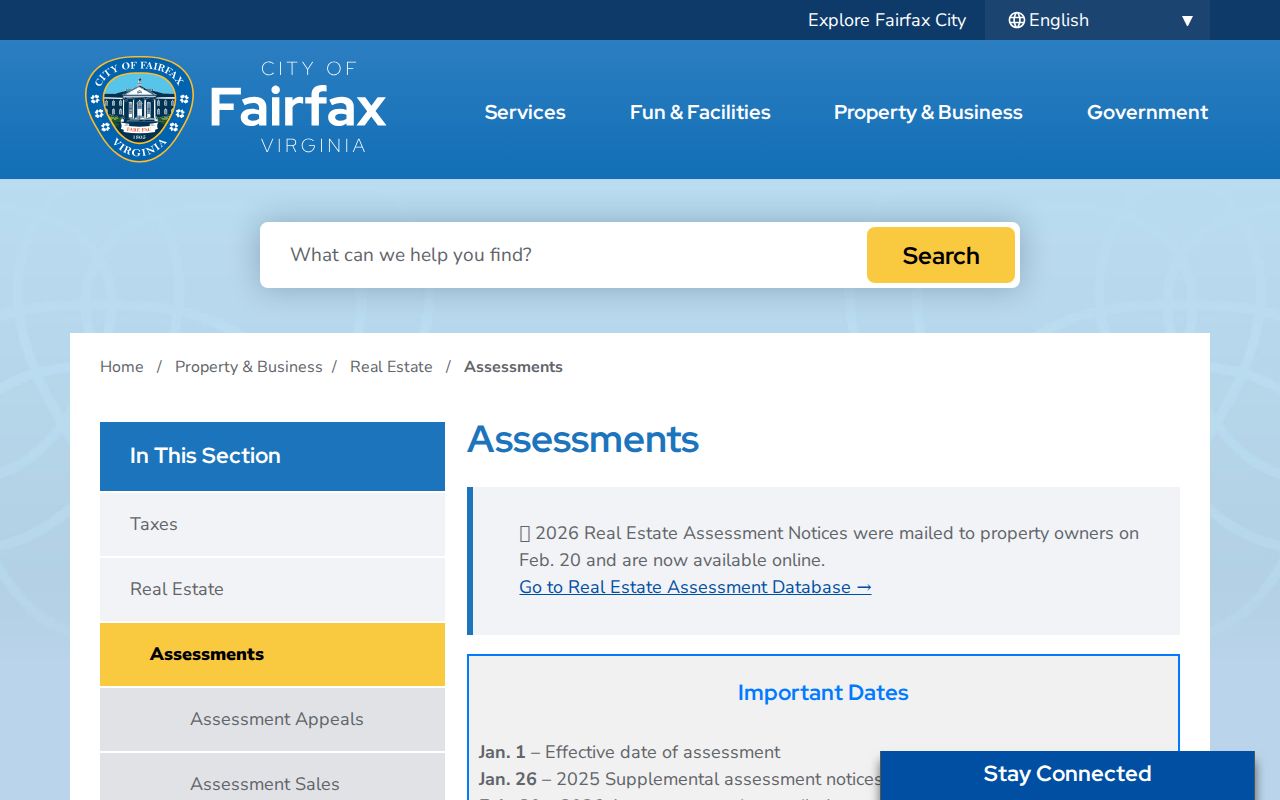
Once the parcel is identified, keep its parcel ID close for the deed, tax, and map checks that follow.
Fairfax City Owner Name Search
A name search helps when the address is unknown. It also helps when one person may hold several parcels. Begin with the exact spelling from a notice, deed, or other official record. Then try ordinary variants: last name first, a middle initial, different punctuation, a business suffix. The city database is billed as a property-information search. The Treasurer says tax accounts can also be searched by owner name.
An LLC, trust, estate, or trustee can be the owner of record. A public entity search may identify an organization. But it does not prove who holds beneficial title. The Virginia SCC Clerk's Information System covers corporate and LLC filings, registered agents, addresses, status, and filed documents. Match an entity result to the deed. Never treat a registered-agent address as the property's situs.
Rule out people with similar names using the parcel ID, legal description, or address. When the record chain turns unclear, a Fairfax City property search should pause. Move to the Clerk's deed index for confirmation.
Separate Fairfax City Address Fields
Situs means the physical location of the land. Mailing address means where the assessment bill or owner correspondence goes. The two often match. A remote owner, business, trust, or estate can use a different mailing address. One outside the city does not move the parcel into Fairfax County.
Keep the fields separate. Compare the assessment record with the Treasurer account or the deed records. A changed mailing address explains where notices land. The legal description and parcel ID still tie the land record to the mapped lot. Never treat a mailing address as proof of occupancy or as the property's location.
Fairfax City Property ID as a Key
The property ID is the cleanest bridge between the city assessment roll, GIS, and tax account. Copy it exactly as shown, separators included. The city publishes no parcel prefix or map-book range. An assumed format can point to the wrong property. Where a record carries no shared ID, lean on the legal description and street location together.
Old Town lots can be long and narrow. A later subdivision or consolidation can shift how a street address lines up with an older description. Compare the lot, block, and plat reference, not just the street number. If a map and a deed seem to describe different shapes, pull the recorded plat and ask the Clerk or assessment office about the correct instrument. The Fairfax City parcel-map workflow shows how to use GIS as a location check without treating a map line as a survey.
What Fairfax City Search Results Show
The city assessment office describes its database as a source of property information by address. The current result card shows whatever fields it shows on a given day. The inventory here is a practical checklist of details worth recording when they appear. It is not a promise that every field is present. Open the official page for today's result. Ask Real Estate Assessments about any missing field.
| Owner name | Record the roll's owner-of-record spelling, including an entity or trustee name. |
|---|---|
| Situs and mailing | Keep the parcel's location separate from the address used for notices. |
| Property ID | Copy the exact city key; no public prefix or format was confirmed. |
| Legal description | Note lot, block, subdivision, unit, or metes-and-bounds language if shown. |
| Assessment fields | Save the tax year and any land, improvement, or total value available. |
| Transfer clue | Compare a last-sale date or instrument reference with the Clerk's index. |
These notes help reconcile property records, but they do not certify title. A card can omit a lien, easement, later filing, or private agreement. Confirm title questions in the deed index and its images; settle boundary questions against the recorded plat and, when needed, a licensed survey.
Fairfax City Deed Search Cross-Check
Need the legal record of who holds title in Fairfax City? The assessment roll is a good starting lead. But the recorded deed is the filing that proves a transfer. Virginia SRA posts circuit-court land-record indexes through the online search application. Index-only searches are free where the local clerk allows it. Pulling images takes a clerk-authorized subscription plus the applicable fees. The clerk's office sets the index start year and image charges, so confirm both there.
Run the latest grantee as the party receiving title first. Then search that same party as grantor to catch later instruments. A deed of trust secures a loan; it is not a new owner of record. Check around the deed date for satisfactions, releases, assignments, easements, liens, and corrections. The deed-record page walks through the index and document types in fuller detail.
Fairfax City Permit Address Search
Building and improvement history lives in the City Accela Permit Portal. It searches by property address or by a permit number such as BLD, PLB, or MEC. An account is required to schedule an inspection. The 2025 instruction page says a requester need not be the applicant or record holder, though. Applications, plan uploads, payments, status research, and printed permits are all portal functions.
The official Fairfax City Accela portal stands apart from the deed and assessment search tools.
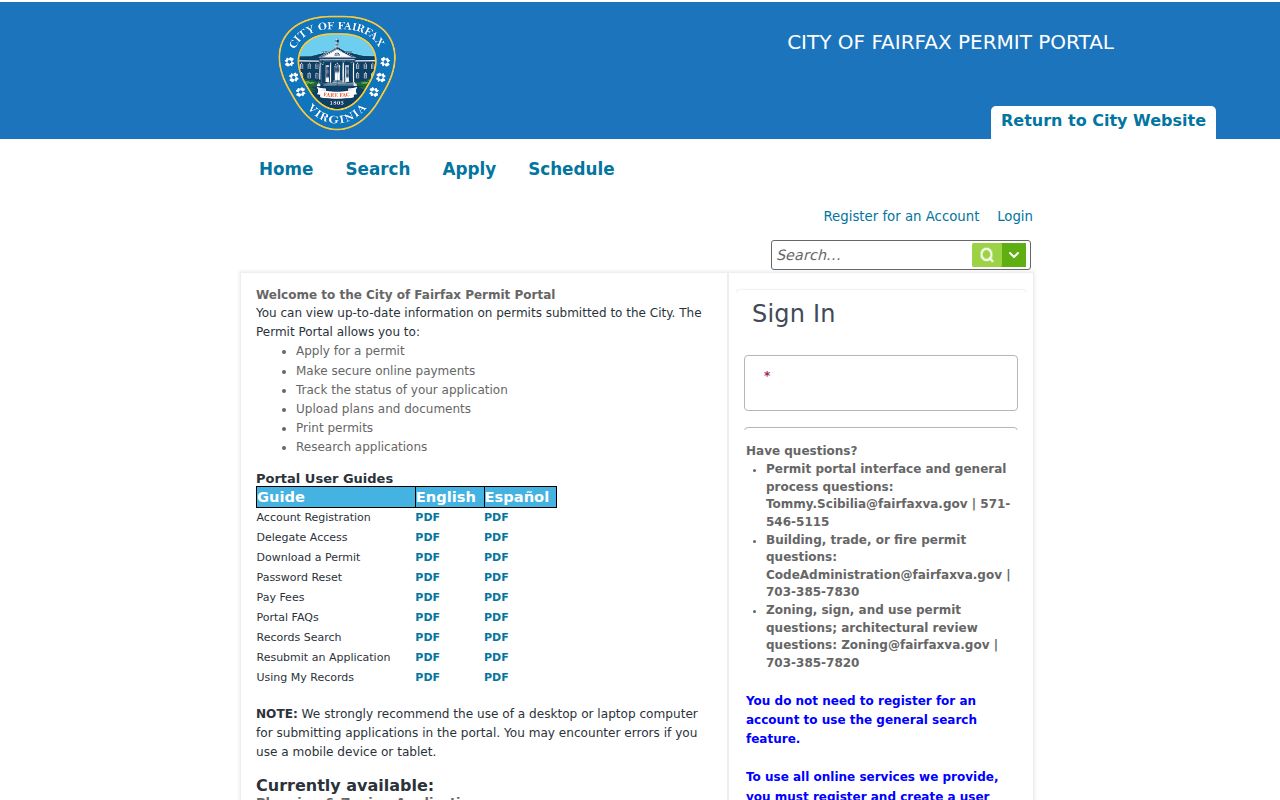
Note: Ask the city directly about permit coverage start dates, the full fee schedule, and older files.
Fairfax City Search Keys Compared
Each search key has its place in a Fairfax City property search. Address search wins when you know the location. Owner-name search can surface every parcel tied to a person or entity. But names demand care. Normalize them. Try last-name-first forms, initials, punctuation variants, and common company suffixes. Search a trustee, estate, or LLC exactly as the recorder shows it on the record. A same-name match is never the right parcel by itself. Confirm the address and legal description agree before trusting it.
| Search Key | Best For | Where It Works | Watch Out |
|---|---|---|---|
| Address | One located parcel | Assessment database and GIS | Street aliases, directionals, and city limits |
| Owner name | Possible parcels held by a person or entity | Assessment roll and deed index | Shared names, trusts, estates, and LLCs |
| Property ID | Matching the same parcel across records | Use the value returned by the city system | Do not infer a format or prefix |
Not a title search. A Fairfax City property search finds public record clues; it does not establish clear title or replace a title professional's review.
When Fairfax City Search Ends Online
Every Fairfax City search system has gaps. The assessment database does not publish its exact live field list. SRA posts no city-specific coverage cutoff. Subscriber images stay out of reach without a clerk-approved account. An empty result can mean an old deed book. It can also mean a spelling variation, an index limit, or the wrong office entirely.
For an older conveyance, the City Circuit Court Clerk is the stop. Ask about public terminals, counter help, written copy requests, and deed books or microfilm. For an assessment or permit record, go to the department that keeps it. A Virginia FOIA request should name the existing record, address, parcel ID, date span, desired format, and a fee limit. The custodian may return an estimate or cite an exemption. FOIA never forces staff to build a new report from separate records.
Treat any property search result as a starting index. Save the source, instrument number, tax year, and the date you checked. The next search can then be repeated and verified.
Fairfax City Address Variants
A Fairfax City street may show up under a route name. It may show up instead of its street name. Test Main Street against Route 236. Test Chain Bridge Road against Route 123. Old Lee Highway and Lee Highway go against Route 29. For a numbered address, retry the current spelling with and without a directional prefix. Do this if the first property search misses the parcel.
These variants prove nothing about a historical rename or renumbering. Confirm an older street reference in the deed, the plat, a city directory, or a newspaper notice. A changed address can still point to the same lot. A similar current address can point to a different parcel. Keep the full legal description and property ID beside the address. A match then never hinges on street wording alone.
A Fairfax address can fall inside the City or the County. Confirm jurisdiction before moving to the deed index. Use the city assessment database and GIS map for this. The city police neighborhood page sends residents to the real-estate map for exactly this check.