
Fairfax City Current Owner Record
The city's assessment system holds the first public owner-of-record entry. Because parcel cards vary, treat the fields below as a checklist of what may appear. Some parcels show more than others. Compare whatever the current card displays against the filed deed before drawing any conclusion. An assessment entry never replaces the recorded instrument itself.
| Owner of record | Name shown in the assessment roll, if displayed. |
|---|---|
| Vesting or entity | How the deed names the receiving party; check the instrument itself. |
| Mailing address | Where assessment correspondence is sent, which may differ from the property location. |
| Situs address | The parcel's physical location in Fairfax City. |
| Property ID | Copy the exact city key; no format was confirmed in research. |
| Deed reference | Compare an instrument number or book/page with the Clerk's index. |
The roll names a legal or tax owner. It does not name an occupant. A mailing address may point to a business, trustee, or agent handling notices for the owner, so use it only through an appropriate property-related channel.
Fairfax City Owner Roll Timing
Fairfax City assesses property every year, effective January 1. A deed recorded later may reach SRA before the roll catches up. The city states no fixed deed-to-roll lag. Read the assessor record as the latest roll entry, not a live title feed.
For a recent sale, line up the recording date and grantee in the Clerk's index against the assessment year. Mismatched names deserve a closer look. Check for a later deed, an estate transfer, or a different name format first. Also watch jurisdiction. A mailing address that just says Fairfax may sit in the county rather than the city. The official Real Estate Assessments page links to the city database and current notices.
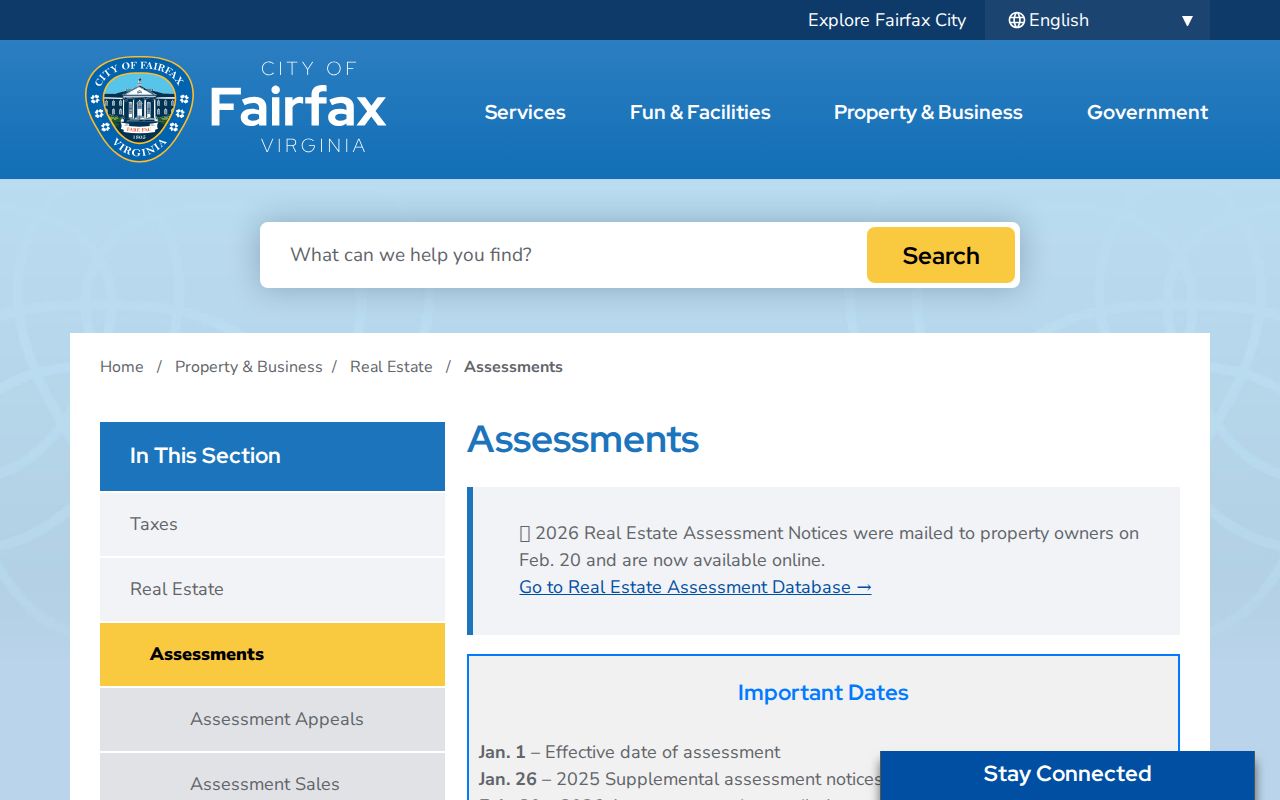
The notice date and tax year show when a change entered the annual roll.
Fairfax City Situs and Mailing Fields
The situs field locates the parcel. The mailing field routes bills and notices. They often differ. An owner may live elsewhere, hold title through an entity, or send mail to an agent. None of that moves the land: a mailing address outside the city keeps the parcel in Fairfax City jurisdiction.
Match the land with the situs, legal description, and property ID. Treat the mailing address only as a correspondence clue. It is not a verified residence, a guarantee the party is reachable, or permission to approach someone at home.
Confirm the Current Fairfax City Owner
Set the current roll name beside the newest conveyance in the Clerk's land index. The roll is an annual tax record. The deed is the recorded instrument. Search the grantee and verify the legal description and parcel location. Then look for a later instrument naming the same party as grantor. A deed of trust or lien alone does not create a new everyday owner.
- Read the current owner-of-record entry in the city assessment database.
- Search the latest conveyance in Virginia SRA and compare the grantee and legal description.
- Check for later recorded instruments under that grantee as a grantor.
- If the name is an LLC or corporation, verify the legal entity name with the Virginia SCC.
- Keep the mailing address separate from the situs when making lawful property contact.
- Owner of record
- The party the assessment roll or deed names in the relevant record.
- Vesting
- The way a deed states that title is held, including an entity or trust.
- Registered agent
- A service contact for an entity, not necessarily a property owner or occupant.
Fairfax City Trust and Entity Names
A current deed may vest title in joint owners, a trust, an LLC, or a corporation. It may also name an executor or an estate-related party. Read the deed's own wording. A short assessment display will not tell you the legal role.
A probate file can explain an executor's authority or an estate transfer. But the probate order itself does not prove any deed was recorded. For a business owner, the Virginia SCC Clerk's Information System verifies the entity name, status, registered agent, address, and filed documents. Compare the exact company name in the land record with the state filing. An agent address is a service contact. It is not evidence that the agent holds title or lives on the property.
License Records Are Not Owner Records
Property files often name builders, tradespeople, architects, engineers, or real-estate professionals. Those names connect to work on the parcel, not ownership. A state license record never shows who owns the land. Virginia DPOR's License Lookup serves a different purpose. It confirms a regulated professional's license and status. That role matters to a permit or project. The DPOR lookup stands apart from the city assessment and deed systems.
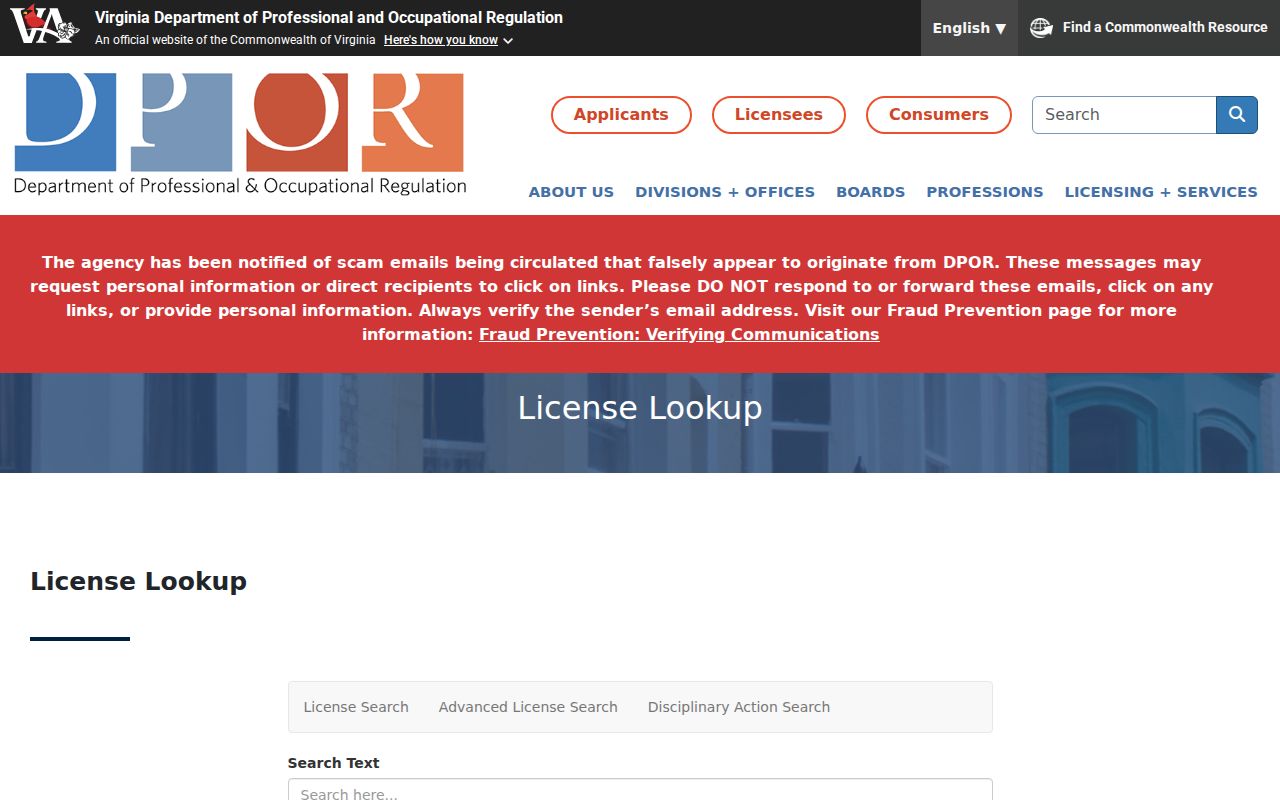
Use the deed and assessment roll to identify the owner. Use DPOR only to verify a licensed service provider.
Fairfax City Protected Owner Information
Most parcel ownership and assessment entries are public. Not every personal field is open, though. Virginia's Address Confidentiality Program gives eligible participants substitute addresses. Vital records, protected addresses, and some court or election fields carry separate limits. Ask the custodian about a redaction or protection rule. Do not guess at a hidden address.
The city records process answers property questions, not occupant identities. When the current roll is unclear, ask the custodian for the existing record. Use a specific address, parcel ID, and date range. Virginia FOIA does not require a new owner report. The city will not build one from scattered files.
Reaching a Fairfax City Owner Lawfully
A tax mailing address on the Fairfax City assessment roll exists for assessment correspondence. You may use it for a legitimate property matter. It can be a business or substitute address, though, not the owner's home. Virginia's Address Confidentiality Program gives eligible participants a substitute address, and protected records may be withheld or redacted under applicable law. Never try to bypass a protection by piecing together other public files.
Lawful use. Use owner information for a proper property purpose. Do not use it to stalk, harass, threaten, or harm a person.
Fairfax City Current Deed Detail
An assessment card can name a current owner. Then the City Circuit Court Clerk's land index is the next stop. Where the clerk enables it, Virginia SRA offers a free index-only search. Images are different. Those require clerk-authorized subscriber access and applicable fees. Fairfax City's index start year and copy charges are not published here. Check the live portal and ask the Clerk about an image or certified copy.
Read the grantee line closely. Note the deed date, the complete vesting language, and the legal description. Then search the same party as grantor for later filings. Releases and corrections matter too, since they can change the recorded picture. Keep one caution in mind: a deed shows how title vested. It does not prove that no lien, easement, or later instrument exists.
The assessor directs transfer research to the land records at the Fairfax County Judicial Center. The current public counter location and hours are not established. Confirm the Clerk's service arrangements before visiting. The assessment roll remains a tax record. It is no substitute for the filed instrument.