
Find a Fairfax City Property Owner
Finding who owns a property in Fairfax City works best when you start with the parcel. Start there, not with a name. The assessment roll names an owner of record. The newest deed then shows the transfer behind that name. A GIS map confirms you have the right lot. A company or trust search may explain an unfamiliar name on the deed. Anyone can search Fairfax City property records by address in a few steps. Remember that records identify legal parties, not residents.
- Search the address in the City of Fairfax assessment database and note the owner-of-record name.
- Confirm the parcel location, property ID, and legal description in the city map and roll.
- Search the newest deed in Virginia's SRA index, matching the grantee and legal description.
- If the deed names a company or other entity, check its state filing and match the entity name.
- Use the mailing address only for lawful property correspondence, not as proof of occupancy.
Fairfax City Assessment Owner Field
The city's assessment portal leads into the property database. There, a parcel card shows the owner-of-record field along with any parcel key or legal description. Treat the screen as a working lead. It is not a certified owner statement. A full deed history usually is not part of the display. The Fairfax City assessment page links to the database and explains the assessment office's role.
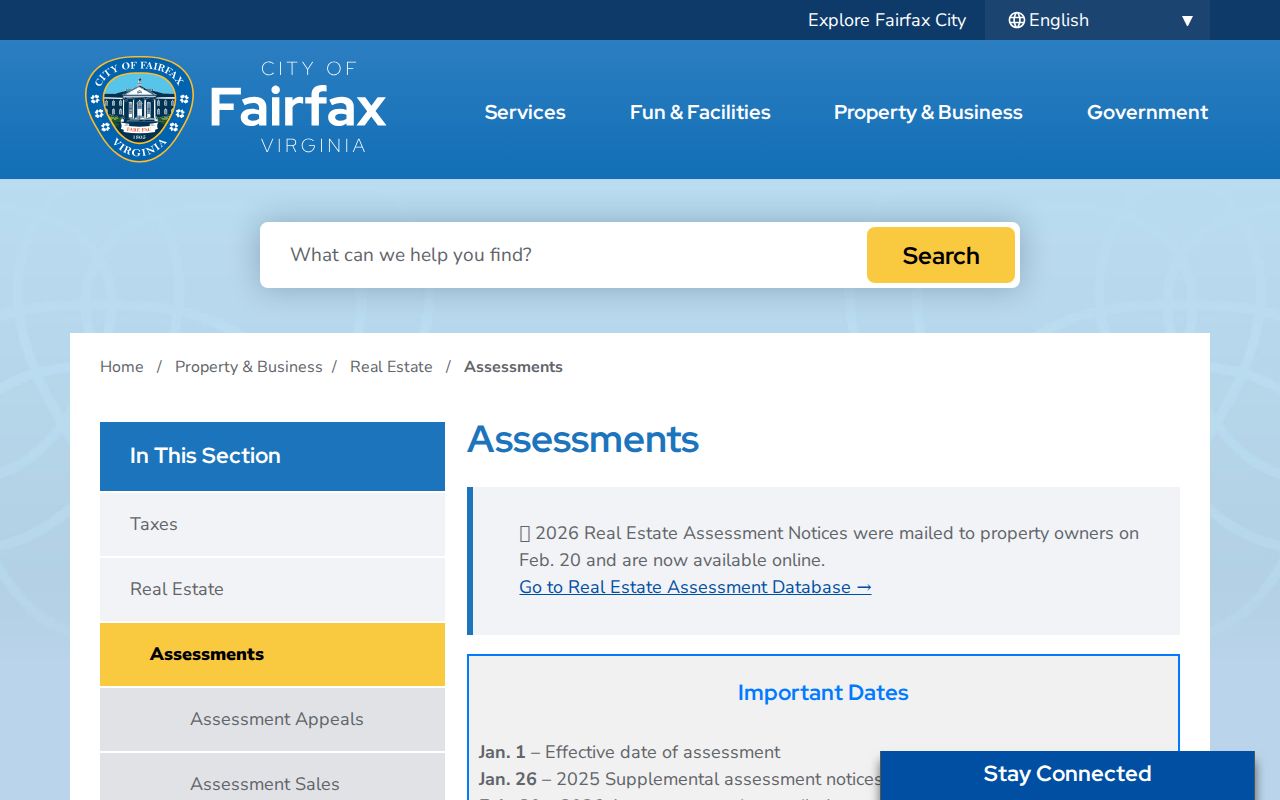
Copy the name exactly before searching the deed index or a state entity database.
Fairfax City Situs and Mailing Address
Situs is simply where the real property sits. The mailing address is where the owner or agent gets assessment correspondence. One locates the parcel. The other routes the letters. A mailing address can sit outside the city, or belong to an entity. It can also belong to an estate, trustee, or service provider.
Confirm the lot with the situs address in the assessment system and GIS. Use the mailing address only for property correspondence. Never use it as a guess at the owner's home. A difference between the two addresses is routine. It does not change which office keeps the parcel record.
Sources for Fairfax City Owner Names
Several public systems can surface an owner clue, and each serves a different purpose. The assessment roll ties a name to a parcel for tax administration. The deed index records filed instruments. The Treasurer account handles charges and payment. GIS adds mapped context. A court case may reveal a dispute or estate issue, but it cannot replace the recorded deed as proof of ownership.
| Source | Owner Info It Gives | Access |
|---|---|---|
| Real Estate Assessments | Owner-of-record and parcel information described by the city | City assessment database |
| Virginia SRA land index | Parties and filing details for recorded instruments | Free index where enabled; images require subscriber access |
| City Treasurer | Tax account, balance, payment history, and receipt | Owner, property ID, or address lookup |
| GIS and GeoHub | Mapped parcel and surrounding layers | Interactive maps and free datasets |
| Virginia SCC | Business entity name, status, filings, and registered-agent details | Clerk's Information System |
An owner of record is not always the occupant. Mailing and situs addresses answer different questions too. Rely on the assessment roll for the name tied to the parcel, and never infer household members or occupancy from a land record.
Fairfax City Deed Confirms a Change
Compare the assessment name against the latest deed. In SRA, search the likely grantee, then read the deed's grantor, legal description, instrument reference, and recording date. Search both directions, since a later transfer may list that party as grantor. Images can require an authorized subscriber account. The city publishes no stated online cutoff year.
A name match without a parcel match is weak. Similar names can belong to different people. One trust or company may hold several properties. The recorded legal description plus a second property clue connects the instrument to the parcel. The current owner-of-record method shows how to compare the roll with the newest deed.
Fairfax City Entity Owner Records
An LLC or corporation may show up as owner on an assessment or deed. The Virginia SCC Clerk's Information System covers business names, status, and filed documents. It also lists registered agents and addresses. Search the exact legal name from the deed. Then weigh the filing history and agent details. A registered agent receives service of process. That role does not prove the agent owns or occupies the parcel. The Virginia SCC business search is the state's official entity gateway.
Use the deed to establish the property link. Use the SCC record to understand the organization behind the name.
Fairfax City GIS Confirms the Parcel
GIS offers a second way to check an assessment result. It confirms the result points to the expected land. Fairfax City's map layers include parcels, roads, buildings, utilities, zoning, and floodplains. Match the mapped location to the situs address and legal description. If a boundary looks uncertain, consult the recorded plat. The GIS layer is not a survey.
The city publishes no confirmed parcel-number prefix or full list of map controls. Enter the exact property ID from the assessment system, then verify the viewer's live tools. A map can separate a city parcel from a similarly named Fairfax County address. It will not reveal who occupies the site.
Fairfax City Estate Owner Clues
A death rarely cleans up the paperwork overnight. The owner of record can stay on the tax roll while the deed record catches up. Estate work in Fairfax City runs through the City Circuit Court Clerk's probate and fiduciary division, which keeps wills, inventories, accountings, qualification papers, and administration records. Start with the land index. Search it under the last known owner's name. Then pull the probate file to see whether an executor had authority and who the listed heirs were. One caution matters. A probate file alone proves no deed was recorded.
Estates in Fairfax City move property by recorded deed or by court order, and the annual assessment roll can trail that event by a full cycle. So when the roll lists an estate or an executor, check the latest land instrument and the parcel description before deciding who owns the property now. Current death-record copies follow separate Virginia eligibility rules.
Limits of a Fairfax City Owner Search
Every owner search has limits. A Fairfax City parcel lookup names the public owner of record, but it cannot say who lives at the property, whether anyone is inside the building, or whether a mailing address is safe to visit. It is not a title search either. Virginia's Address Confidentiality Program gives eligible participants a substitute address, and some records may be withheld or redacted under law. Treat the result as a lead.
Lawful use. Owner information is for property research, due diligence, civic work, and related lawful purposes. Do not use it to stalk, harass, threaten, or harm anyone.
Fairfax City Owner Name Clues
The same name can wear several hats. The assessment roll ties a name to a parcel. A deed's grantee receives the stated interest. The Treasurer's lookup pairs an account with an owner name, an ID, or an address, while a registered agent is only a service contact for a company. None of these labels tells you who occupies the property.
Names that disagree need patient comparison. Line up the property ID, situs, legal description, and recording date before you draw any conclusion about a Fairfax City parcel. Search the exact company or trust name shown in the deed, then read the SCC record for that entity's legal filing. An estate or executor in the chain points to the Circuit Court Clerk's probate file for authority. Only the recorded land instrument confirms the transfer, though.
Is a public record missing? Ask the office that keeps it. A narrow Virginia FOIA request for the existing file works too. Give the parcel, the name, the date span, and the document type, so the custodian can tell the right Fairfax City property from a same-name match.