
Trace Former Fairfax City Owners
Fairfax City property records hold the story of every parcel. Past owners come into view one deed at a time. Start with the newest recorded conveyance and work backward. Each deed names a grantor and a grantee. It often cites a book, page, or instrument number that leads to the next transfer. Old descriptions may rely on plats or land tracts rather than a modern street address. So match the legal description at every step. To search Fairfax City property records by address, begin with the current parcel. Let the deed chain carry you back. Early entries may live in deed books, microfilm, or archives. The Clerk can help you reach them.
| Transfer Date | Grantor to Grantee | Deed Type | Book/Page or Instrument |
|---|---|---|---|
| Latest verified transfer | Read from the deed image | Read from the instrument | Copy the Clerk's reference |
| Prior acquisition | Search the latest grantor as grantee | Read from the instrument | Copy the Clerk's reference |
| Earlier transfer | Repeat with the prior grantor | Read from the instrument | Copy the Clerk's reference |
SRA offers the accessible index and a route to Clerk images. Online entries can stop short of the transfer you need. Ask about deed books and microfilm at that point. Plats help align lot and block references. The Library of Virginia provides catalog starting points. Fairfax County Public Library adds local-history starting points, though their exact Fairfax City directory holdings vary.
Move Back Through Fairfax City Deeds
A chain of title is the ordered sequence of transfers tied to one parcel. In Fairfax City, Virginia SRA can expose the circuit-court land index. This works when local index searching is turned on. Search the current owner as grantee to find the acquisition. Then take that deed's grantor and search again as grantee. Continue only while the legal description and parcel clues agree.
- Find the newest matching deed with the present grantee name.
- Read the grantor and legal description from the filed instrument.
- Search that grantor as grantee to find the preceding conveyance.
- Compare parcel descriptions, dates, and recording references as you repeat.
- If the online index ends, ask the Clerk about older books, microfilm, and historical indexes.
- Grantor
- The person or entity transferring an interest in the deed.
- Grantee
- The person or entity receiving the interest.
- Chain of title
- The ordered sequence of recorded transfers tied to the parcel.
- Legal description
- The written parcel description used to match older records when a street address shifts.
Fairfax City Deed Index Cutoff
Fairfax City publishes no stated cutoff for its online SRA entries. Virginia allows free index-only searching where a circuit clerk enables it. Images, by contrast, require clerk-authorized subscription access and fees. A missing online result says nothing about where the local deed record begins.
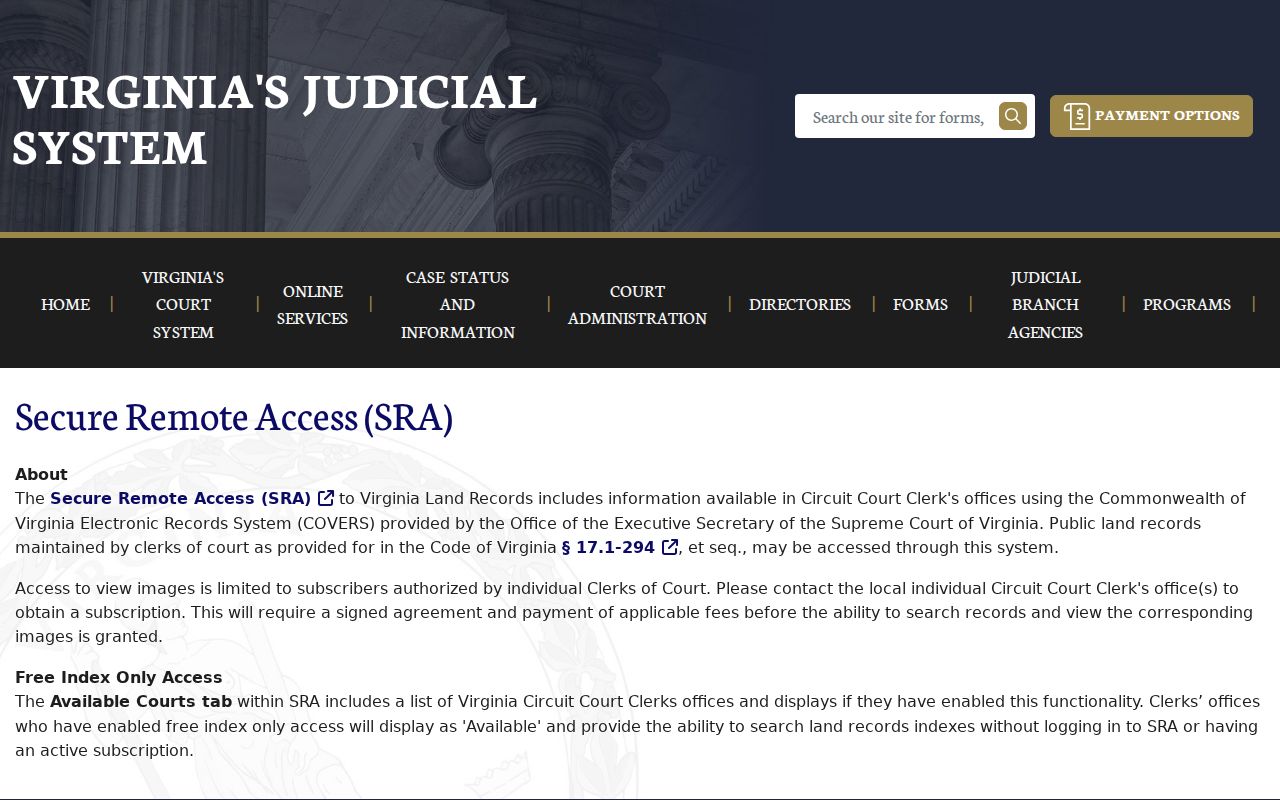
The Virginia SRA information page describes the index and image rules.
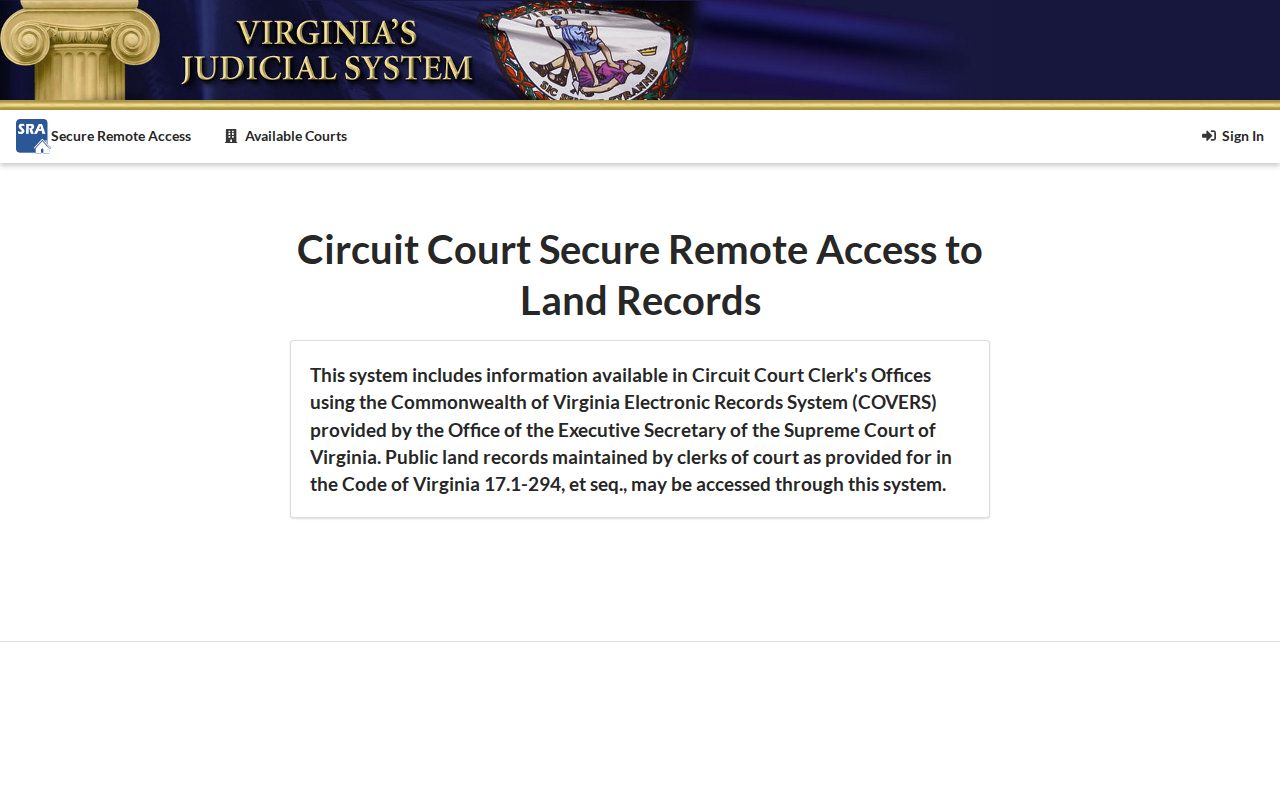
The land-record search application is the online index route.
Ask the Clerk where the online entries stop. The public terminal, old deed books, microfilm, and written requests can bridge the gap.
Fairfax City Liens and Deeds of Trust
Not every instrument between two conveyances is a sale. A deed of trust, assignment, modification, substitution of trustee, release, satisfaction, easement, covenant, or lien can interrupt the chain. Read each instrument type before counting it as a transfer. A loan secured by the parcel does not make the lender the owner of record.
Search lender and trustee names alongside owner names. Use recording dates and instrument references to pair an original filing with its later changes. Alternatively, use the references to find later releases. When a release is not visible, assume nothing about whether the debt stands or was cleared. Confirm the question with the Clerk or a title professional.
Fairfax City Plats and Street Names
A current street address may not exist in an early deed. Legal descriptions can use a farm or tract name. They can use metes and bounds, a subdivision lot and block, or a condominium unit. A plat reference may appear as well. In Fairfax City, test the main road aliases with care. Main Street and Route 236 are the same road. So are Chain Bridge Road and Route 123. Watch for Old Lee Highway and for Lee Highway and Route 29. Note addresses with or without a directional prefix.
Never assume a street rename or number change without proof. Set the deed's full description beside subdivision plats. Compare it with historic maps, directories, newspapers, and the modern assessment parcel. The old courthouse grid and the long, narrow Old Town lots make the plat valuable. It bridges shifting descriptions across the years.
Fairfax City Estate Transfers
The Clerk keeps probate and fiduciary files. A deceased owner can be traced through them. Search the last known owner in the land index as both grantor and grantee. Then review the probate material for a will, executor, heirs, qualification, and authority. Estate property may pass by recorded deed. It may also pass by court order. A probate file alone does not prove a conveyance was recorded.
Death certificates are state vital records. Under Virginia Code §32.1-271(D), death records open to the public after 25 years, subject to exceptions. Current copies carry eligibility and identity rules. That regime sits apart from ordinary land-record access and is not an open deed search.
The Virginia Online Case Information System can point to a case. The complete probate or fiduciary file comes from the Clerk.
Note: Contact the Clerk's office for current probate counter information and copy fees.
Fairfax City Archive and Library Trails
When a deed index stops short of the transfer you need, head to the Clerk's older deed books. Microfilm comes first there too. The Library of Virginia catalog is the natural next stop. Fairfax County Public Library local-history resources add historic maps and city directories. They also hold newspapers, plats, and genealogy material. Search the catalogs before assuming anything is onsite. Directory years, obituary indexes, and microfilm identifiers vary, so plan a catalog pass first.
Local sites can deepen the story. The Fairfax Museum and Visitor Center and Historic Blenheim tie properties and neighborhoods to the city's past. The Ratcliffe-Allison-Pozer House does too. George Mason University regional collections may hold maps, photos, and yearbooks. Planning papers are worth checking there as well. None of this replaces the recorder's own deed records.
Treat a newspaper item or directory listing as a lead only. Then confirm legal ownership through the Clerk's recorded deed instrument.
Fairfax City Ownership Through Time
The land has a layered past. Providence developed around a courthouse finished in 1800, and the town took shape by 1805. It was renamed Fairfax in 1874. Incorporation as an independent city came in 1961. A chain of title therefore crosses courthouse crossroads, farm parcels with rural descriptions, nineteenth-century town records, and postwar subdivision plats.
Old Town's contributing buildings span 1800 through the 1930s. Postwar growth and automobile-era roads reshaped parcel patterns around that historic core. That explains why an address on a modern tax roll may not match a nineteenth-century deed. Use the history to choose which property records to pull, not as a substitute for the chain of title itself.
How Far Fairfax City Deeds Reach
Fairfax City deed records reach back generations through the Clerk of Circuit Court, though the exact first deed-book year takes a call to that office to pin down. No courthouse fire or known records loss appears in the city's history. That matters. Where no disaster interrupted the books, a deed chain traced through the recorder's index can usually run unbroken to the earliest volumes. Still, resist assuming completeness from a web search alone. An old parcel may sit in a deed book no online index reaches, so confirm the start of the chain with the Clerk before trusting a gap.
Lawful use. Former-owner research can support title work, house history, estate matters, and property diligence. Do not use records to track, harass, threaten, or harm anyone.