
Fairfax City Deed Types and Transfers
A deed conveys an interest in land. The grantor gives up the interest; the grantee takes it. Fairfax City deed records may also hold trustee deeds, executor deeds, and corrective instruments. The document type matters as much as the names. Read the date, legal description, and recording reference together to see what actually changed. Trust the terms printed on the Clerk's result rather than any menu label you expected.
| Deed Type | What It Does | Common Use |
|---|---|---|
| Warranty deed | Conveys the stated interest with the covenants written in the instrument. | Review the full deed and its legal description. |
| Quitclaim deed | Transfers whatever interest the grantor holds, without a title guarantee. | May appear in family or title-cleanup transactions. |
| Trustee deed | Records a conveyance made by a trustee under the authority stated. | Check related notices, appointments, or court material. |
| Executor deed | Records a transfer made through estate administration. | Read with the probate file and the executor's authority. |
| Correction or re-recorded deed | Changes or clarifies a prior filing as stated in the document. | Compare both instrument references and dates. |
Not every filing makes someone an owner. A deed of trust, lien, or lis pendens can sit beside a conveyance in Fairfax City property records without transferring title. Read the instrument's own stated effect.
Fairfax City SRA Search Screen
The Virginia land-record application is the online route into the SRA index of circuit-court instruments for Fairfax City.
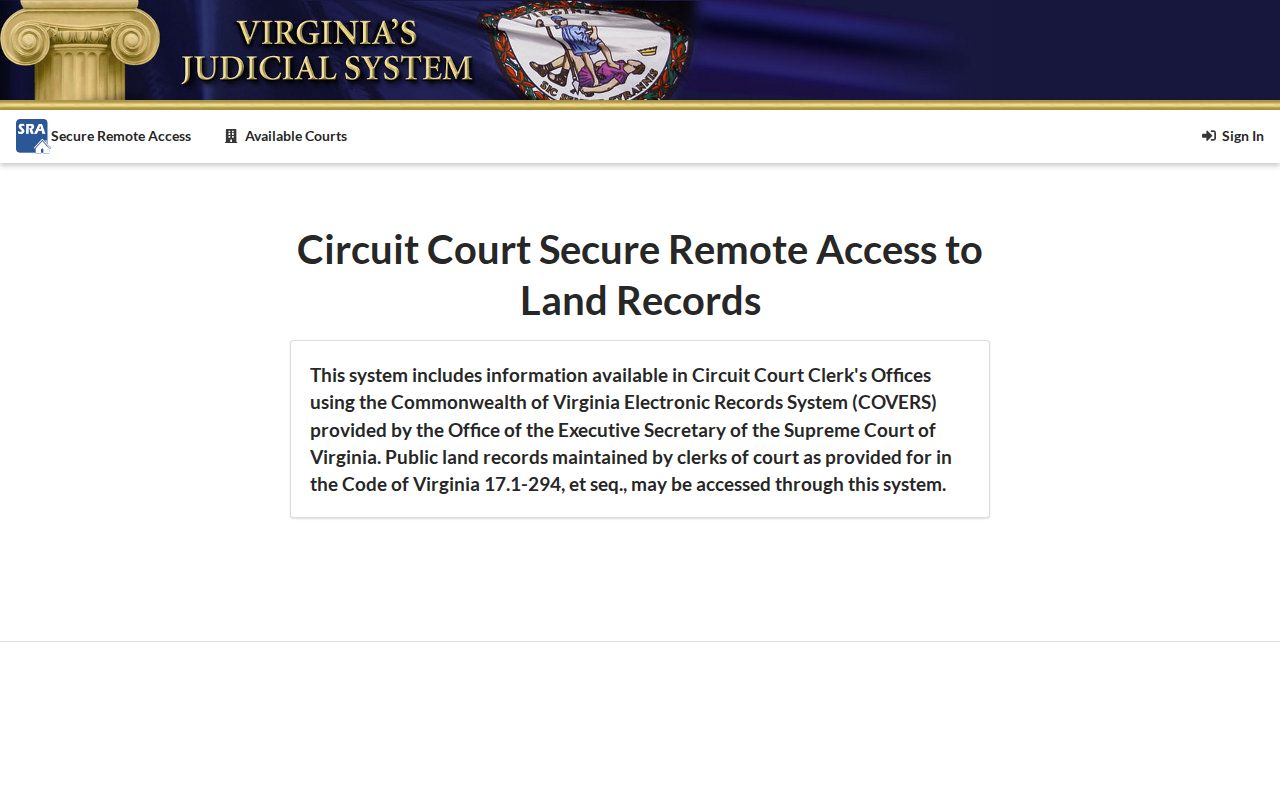
Work only with the fields the live form offers. Fairfax City field labels, date coverage, and result controls may differ from what you expect. When party names appear, search each person or entity in both grantor and grantee roles. Note spelling variations as you go.
An index hit is not the whole instrument. Open or request the actual image. Check the legal description, signatures, attachments, and references to earlier filings. A title question may span several deeds. It may involve a corrective instrument or a release recorded after the original transfer.
Fairfax City Grantor-Grantee Index
Virginia's SRA/COVERS service connects to circuit-court land indexes through the land-record search application. Search both directions when you can. A one-way lookup can miss the other side of a chain. Copy the instrument type exactly as the index returns it. Also copy the recording date and party names. Grab the book/page or instrument number too. The Clerk's office publishes no local start year, field labels, or result cap for Fairfax City grantor-grantee searching. Treat your results as one layer of the record.
- Start with the owner name from the city assessment record and search it as grantee.
- Open the likely conveyance and compare the legal description and parcel location.
- Read the grantor and search that party as grantee to find the preceding transfer.
- Search forward from a former owner as grantor to find later conveyances or related filings.
- If the online index does not reach the needed period, ask the Clerk about deed books, microfilm, and older indexes.
Every match needs a second clue. A common name, a family trust, or a corporate party can show up on several parcels in Fairfax City deed records. Confirm with a property ID, a complete legal description, or a street location before trusting an index hit.
- Grantor
- The person or entity that transfers an interest in a deed.
- Grantee
- The person or entity that receives the interest.
- Chain of title
- The ordered set of recorded transfers tied to the same parcel.
- Book/page or instrument number
- A Clerk's reference used to locate a recorded document; use the format shown by the index.
Fairfax City Deeds of Trust and Releases
Virginia land records carry deeds of trust and assignments. They also include modifications, substitutions of trustee, and certificates of satisfaction or releases. A deed of trust is a loan's security instrument, not a sale deed. An assignment moves the interest to a new holder. A recorded satisfaction releases the named instrument.
When loan filings matter, search the lender, trustee, owner, and parcel description together. Follow instrument numbers and dates through modifications and releases. If no release appears online, do not assume the debt is unpaid. Ask the Clerk or a title professional to read the chain.
The land index also holds easements, covenants, and restrictions. Mechanic's liens, tax liens, and judgments appear there as well. Lis pendens, powers of attorney, and corrective filings round out the index.
Fairfax City Deeds and Recorded Plats
A legal description may cite a lot and block. It may also cite a subdivision, a condominium unit, metes and bounds, an easement, or an earlier plat. Copy the whole description. A street name alone is not enough. A recorded plat can show lot dimensions, streets, dedications, easements, and revisions. It can also show the subdivision's recorded name.
Old Town reads differently on a map. Its courthouse-centered grid and long, narrow lots differ from later parcel geometry in Fairfax City. Treat a modern GIS outline as a representation only. Compare it with the recorded subdivision map. The Fairfax City parcel-map page walks through the map-to-plat check.
Fairfax City Deed Copy Requests
When no web image exists, ask the City Circuit Court Clerk about its public terminal. The Clerk's office also handles counter service, telephone inquiries, written copy requests, and subscriber access. The office publishes no current phone number, counter hours, mailing address, or copy-fee schedule online. The assessment office notes that its transfer research uses land records at the Fairfax County Judicial Center. So confirm where public land-record service is provided before you travel.
For any request, give both party names and the likely recording period. Add the parcel situs, the full legal description if you have it, and a book-page or instrument number. Say whether you need an ordinary or certified copy. Ask for a cost estimate first. Nothing pulled from a website counts as certified unless the Clerk certifies it.
For older material, ask specifically about deed books, microfilm, and historical indexes. The state SRA page sets general access rules but no local online cutoff.
Fairfax City Deeds and Court Cases
A title fight in Fairfax City often leaves two paper trails. One lives in the court file. The other sits among the recorded land records at the Circuit Court Clerk's office. A foreclosure, partition, quiet title action, or judgment can generate both. The case order and the recorded deed are separate documents. Pull each one when the question turns on a transfer. Foreclosure leaves its own fingerprints in the deed records. Look for a trustee's deed, a lis pendens, a deficiency action, or a court order. Search land records by owner, lender, trustee, and the parcel's legal description. Then search case records by party and case type. General District Court money claims can ripen into judgment liens on real estate. That court does not index deeds, though. Federal bankruptcy filings run through PACER, which needs an account and charges access fees. The Virginia case information system can point you to a court event. It is no substitute for the Clerk's full case file.
Fairfax City Deed History in Old Town
Fairfax City started life as Providence in 1805, beside a courthouse finished in 1800. The town adopted the Fairfax name in 1874. It became an independent city in 1961. That arc spans a long time. An old deed description may speak of a village lot, a courthouse neighborhood, a farm, or a street grid that arrived later. Use the chronology as a clue. It does not prove two differently worded parcels are the same land. Tracing a long chain works backward. Start with the latest deed. Move to the prior grantor. Compare plats, maps, and old property descriptions along the way. The courthouse holds records going back generations. No fire or reindexing event is on record as a known cause of gaps. Assume nothing was destroyed. A missing deed usually just needs a different search angle. Old Town's historic district includes contributing buildings from 1800 through the 1930s. Changes to those buildings may be documented in Board of Architectural Review files. Those files were created under historic overlay review. They explain a structure's history but never replace the conveyance itself. The city's history resources add useful local background.
Getting a Fairfax City Deed Copy
The state SRA information page describes a free index-only mode. The clerk marks courts as available. Viewing an image is another matter. The viewer must be an authorized subscriber, sign an agreement, and pay the applicable fees. The Clerk's office sets the image charge for Fairfax City. Confirm the current cost before relying on it. One caution applies to any download: a plain printed image is not certified. Only the Clerk can issue a certified copy of a deed. The Virginia SRA page spells out those access limits and links to the subscription application.
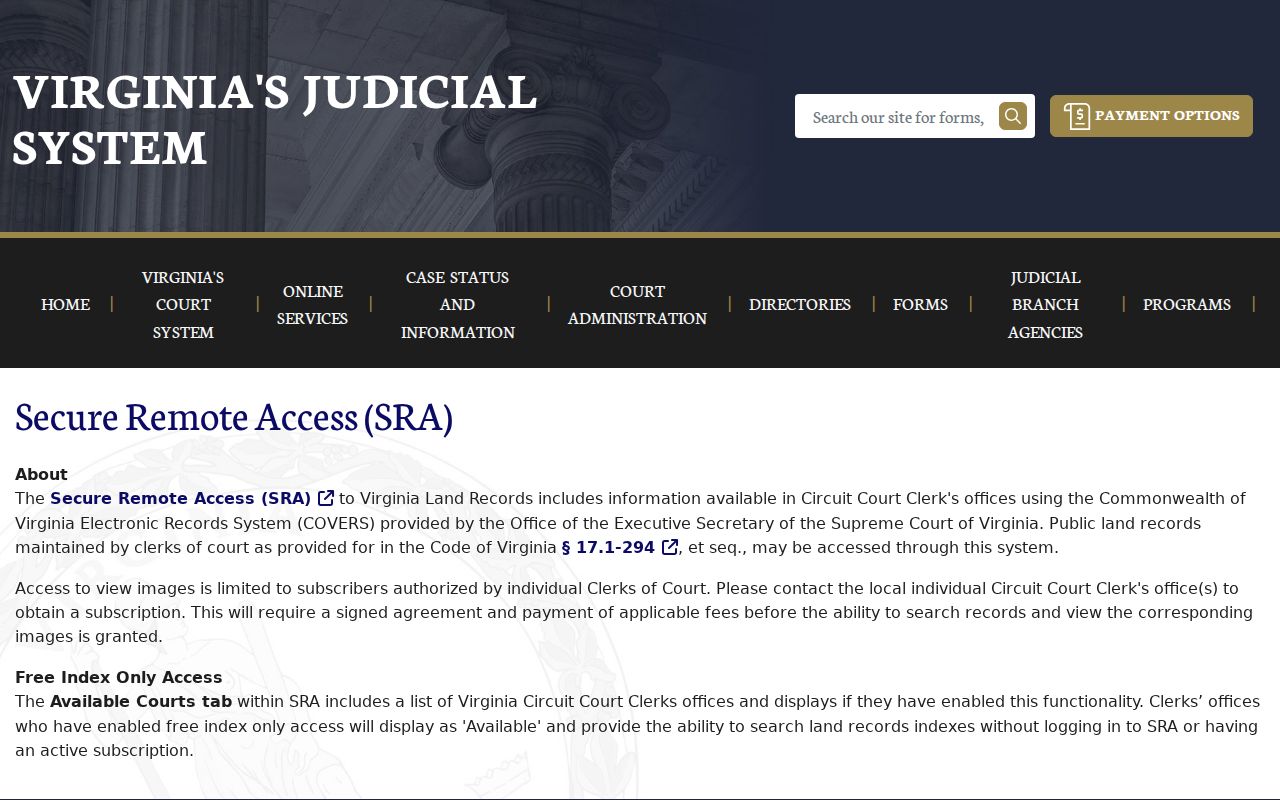
An image may be missing online. The instrument may be old. Or you may need certification, so go to the City Circuit Court Clerk. Fairfax City offers several routes. Use the public terminal at the courthouse, the Clerk's counter, or a telephone call. A written request works too. So does an SRA subscription inquiry. The Clerk's current phone, hours, mailing address, and copy fees are set by that office. Confirm those details before you visit or send payment. A written request travels faster with the right details inside. Include the parcel address, grantor and grantee names, and an approximate date. Add the instrument number or book and page. State the copy type you want and a fee limit. Unsure of the date? Say so and give a range instead of guessing a record number.
Recorded, not guaranteed. The Fairfax City deed index shows filings in its coverage, not every possible interest. A title professional checks the chain and related records before concluding that ownership is clear.