
Fields in Fairfax City Property Tax Records
Fairfax City splits its tax information between Real Estate Assessments and the Treasurer. So no single screen holds everything. The table groups the questions each record answers. A live assessment card does not expose a complete field list. Confirm exact entries on the current city page rather than assuming each parcel screen carries every item.
| Field | What It Shows | Where |
|---|---|---|
| Assessment | Annual parcel value and assessment year | Real Estate Assessments |
| Land and improvements | Value components where shown in the parcel record | Real Estate Assessments |
| Relief or exemption | Tax treatment attached to qualifying property or owners | Real Estate Assessments |
| Bill and balance | Amount due, payment history, and receipt | City Treasurer |
| Due dates and charges | Current bill deadlines, late fee, and interest | City Treasurer |
Fairfax City sets annual assessments at 100 percent of fair-market value as of January 1. The city uses comparable-sales, income, or cost approaches depending on the property. The Treasurer's bill depends on the assessment and the rate set by City Council. A tax amount is therefore not a deed price, and a market-value estimate is not the current amount due.
Fairfax City Assessor and Treasurer
Real Estate Assessments and the Treasurer answer different halves of the tax question. The assessor maintains the annual property roll. The Treasurer bills, collects, and issues receipts. Check the parcel and value in the assessment record first, then confirm what is due or paid through the Treasurer's account. A value printout is not a balance statement.
City Council sets the tax rate, and the assessment page gives an example of $1.0725 per $100. A rate may change between bill years. Verify the rate that applies. Multiplying assessed value by that rate gives the general relationship. The account can also reflect relief, exemptions, credits, or other city billing adjustments.
Fairfax City January Value Date
Fairfax City assessments are annual and take effect January 1. The assessor values each parcel at 100 percent of fair-market value. It chooses comparable-sales, income, or cost methods by property type. That is the valuation date for the roll. It is not a closing date or payment date.
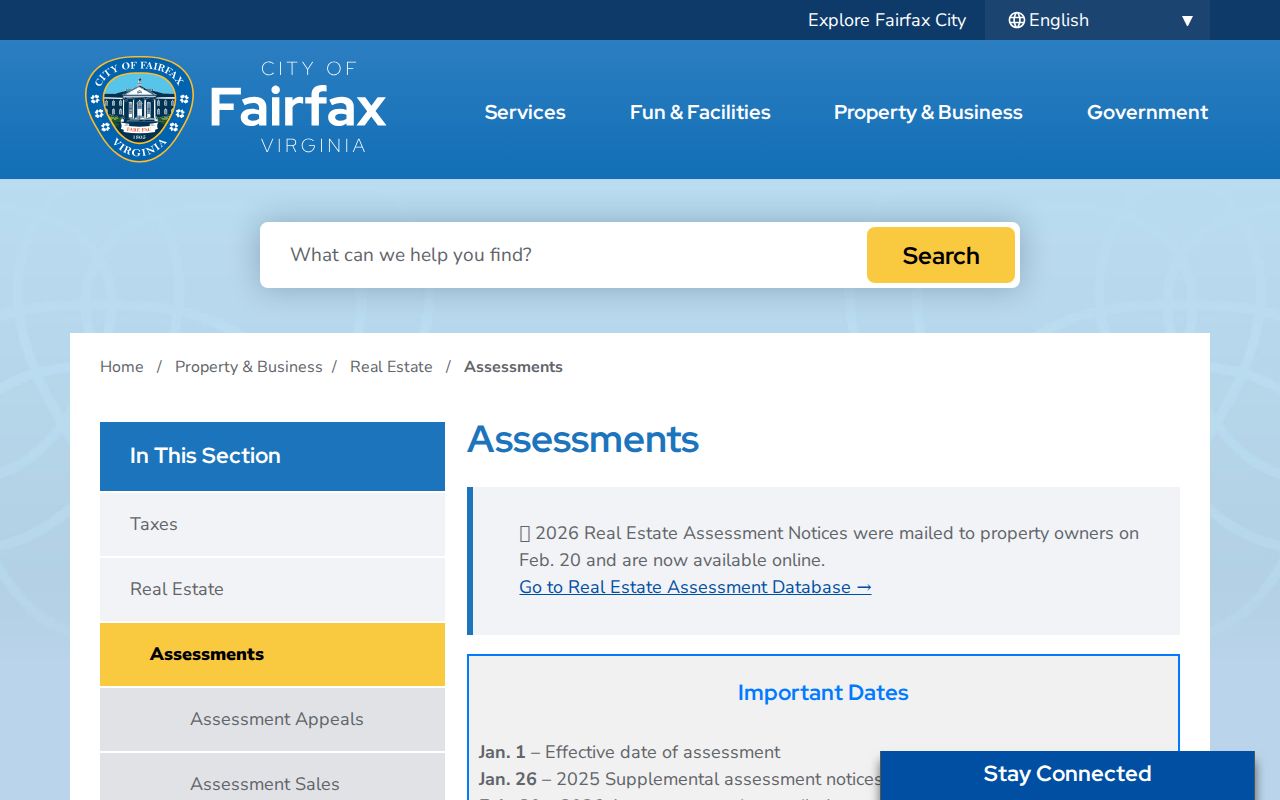
The 2026 notices were mailed February 20 and posted online. A deed recorded afterward can lead the roll for a while. The city publishes no fixed transfer-update lag. A parcel bought in March may still show the prior owner of record. It may stay that way until the next cycle. Keep the assessment year attached to the number. A recent conveyance belongs in the Clerk's land index. Confirm there before calling the roll stale. Is value itself the question? The separate Fairfax City property value page explains assessed value, market value, and sale price.
Looking Up a Fairfax City Tax Bill
The City Treasurer lets a tax lookup run on owner name, property ID, or address. Search labels vary by portal version. Follow the controls the current page shows. A mailed notice names the billing period. The online account adds payment history and a receipt, so the two work best together.
- Open the City Treasurer page and choose an available owner, property ID, or address search.
- Match the result to the city parcel, then read the bill period, amount, and payment status shown.
- Save or print the account receipt for proof of a payment entry.
- Compare the assessment year and any relief record in the Real Estate Assessments system.
- Ask the Treasurer to confirm a balance or delinquency if the online account and a notice disagree.
- Assessed value
- The annual value used as the basis for property taxation.
- Tax rate
- The amount set by the city and applied to assessed value to calculate a bill.
- Tax relief
- A city program or exemption that changes the taxable amount for qualifying owners or uses.
- Tax lien
- A recorded claim related to unpaid tax; confirm the current status with the custodian.
Fairfax City Exemptions and Relief
Government property is exempt by constitution. Religious, charitable, cultural, and historical-use property may qualify as well. Exempt land still carries an appraisal record. The city also mentions relief for elderly and handicapped owners, but it publishes no current age, income, or application rules. Do not infer eligibility from the program name.
Relief changes what is owed. It does not change title. Keep the determination letter and its covered year with the tax account records, and ask Real Estate Assessments or the Treasurer which record controls a missing benefit. The assessment office page is the official source for city value and appeal information.
Ask the city for the applicable form and rules before submitting a relief claim.
Fairfax City Late Charges and Payments
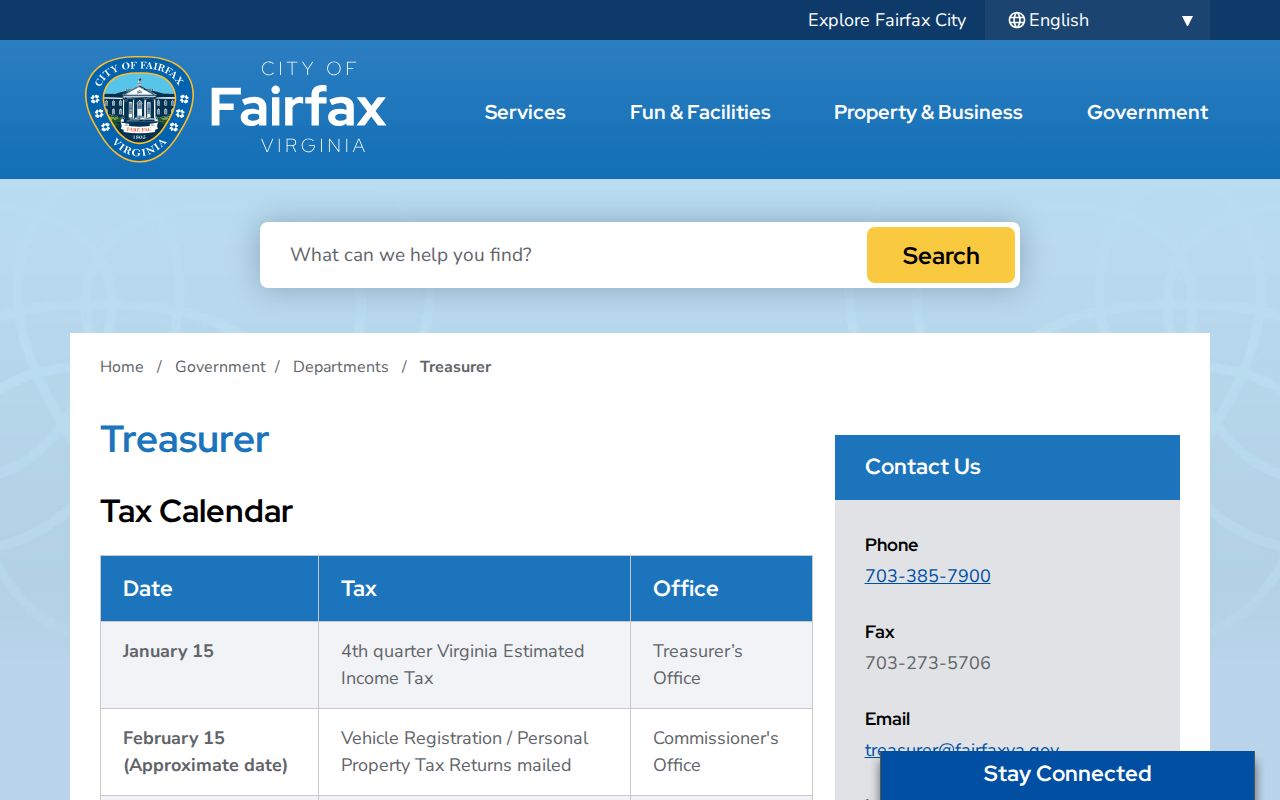
The Treasurer applies a 10 percent late fee to unpaid real-estate and personal-property tax. Interest accrues on the 15th of each month on unpaid balances. The city calendar sets June 21 for the first half. December 5 is the deadline for the second half. Late costs add up fast. Check the account before paying, since a parcel balance can hold separate charges or adjustments.
Payment history and receipts live in the Treasurer's system. The assessment value page does not hold them. A receipt is the better proof of payment. A notice may say paid while the account still shows an open balance. Ask the Treasurer to reconcile it. Cite the property ID and bill period. The Treasurer entry page links to the tax account and payment services.
Neither notice nor third-party letter is a balance statement.
Fairfax City Delinquency and Tax Sale
A delinquent tax bill sometimes signals a distressed parcel, but Fairfax City publishes no tax-sale list, auction vendor, redemption rules, or downloadable delinquency file. A late charge alone does not mean a property is headed to sale. Confirm any delinquency with the Treasurer. Then search the Clerk's land index and case records for liens or proceedings tied to the parcel.
Tax liens, judgments, and foreclosure notices each leave a separate record trail. A recorded lien or lis pendens shows up in the land index. The court docket holds the case. The Treasurer account carries the tax status. Match party names, the parcel description, and dates across these property records before treating them as one story about the same property.
Appealing a Fairfax City Assessment
Fairfax City offers a 30-day administrative review window for assessments. The 2026 cycle has its own deadlines. The city's date-specific appeals page and assessment calendar list April 3 for administrative review. They list June 30 for the Board of Equalization. A separate general notification page still shows July 1 for the Board. Use the current cycle's form and parcel notice. Contact Real Estate Assessments if the dates look inconsistent.
Give the assessor a clear basis for the change you want. Good evidence might be a factual error in the property characteristics. It might also be comparable sales, or data bearing on the method used. Depending on property type, the city weighs the comparable-sales, income, and cost approaches. The Board can affirm, lower, or raise the assessment. A further appeal may reach the Circuit Court.
Appeal window. Current 2026 forms say June 30 for the Board; an older general page still lists July 1. Confirm the date on the parcel's notice and the current calendar before filing.
Review the assessment year and parcel characteristics before comparing values. Fairfax City assesses real estate annually at 100 percent of fair market value as of January 1. Depending on the property, the city may use comparable sales, income, or cost methods. The tax bill is a separate calculation: the City Council sets the rate, which is applied to taxable assessed value. A published example rate of $1.0725 per $100 is not a promise of the current rate. Check the bill year, any applicable relief or exemption, and the Treasurer account separately.
Fairfax City Assessment Appeal File
Keep the notice, the current parcel record, and your evidence together in one appeal file. Fairfax City's date-specific 2026 instructions list April 3 for administrative review. June 30 is the Board of Equalization deadline. A separate general notification page still lists July 1 for the Board. Check the current parcel notice and assessment calendar before filing.
The Board may affirm, reduce, or raise the assessment. A further appeal can go to Circuit Court. A strong submission names the parcel and tax year. It also names the disputed property fact and the value being challenged. Comparable sales, income details, or cost figures may matter depending on the method. Download the current administrative review or Board form from the official appeal instructions. The page lists RealEstate@fairfaxva.gov and REAppeals@fairfaxva.gov for submissions.